Messi changed my life
Lionel Messi changed my life.
No, I've never really met him, although I was on the field with him when he first "retired" from the Argentine national team after losing the 2016 Copa América final. But I'll get to that.
Ever since I can remember, I wanted to be a professional soccer player. Soccer was my identity. My family is Argentine, so you could say it’s in the blood. Then sometime in high school, I started to lose interest in it. It was an uneasy feeling. Something that had been my passion for essentially my entire life suddenly wasn't anymore. It reminded me of Gordon Bombay in The Mighty Ducks saying, "I hate hockey" as an adult, when it had been his favorite thing in the world as a kid. I remember hearing that and wondering how that could even happen. How could something that had once meant everything to you just disappear? Somehow, that's what had happened to me. Filmmaking had taken its place.
By college, soccer was mostly out of my life. I still loved watching the World Cup and a few Argentina qualifiers, but that was about it. I'd gone from playing every day to playing maybe once a year at an annual intramural tournament.
Then came the 2006 World Cup and all this talk about an Argentine prodigy—the next Maradona—named Lionel Messi. We only saw him play for a handful of minutes, but you could already tell there was something different about him.
Fast forward to the 2010 World Cup in South Africa. At this point, I really only knew how to follow soccer through World Cups. Messi was now considered the best player in the world. USA’s Landon Donovan scored his iconic goal against Algeria, causing me to be late for a coffee date with the woman who would eventually become my wife. (Did the emotional high contribute?)
And Messi, despite having a disappointing tournament, got me completely hooked.
I'd never seen anyone play like that before. You could fire a ball straight at him and his first touch would somehow place it perfectly at his feet. He could dribble past anyone. The control, the vision, the passing, the shooting. Most players get a scoring opportunity and you hope they'll finish it. With Messi, I already knew it would go in.
I had to watch him every chance I got, and that's how I discovered European club soccer. Watching soccer in America around 2010 required a little more dedication than it does today. You couldn't just select any match and stream it. I often went to bars in New York to watch Barcelona. Nevada Smith's became a regular destination because how the hell else were you supposed to get beIN Sports? And I loved listening to broadcaster Ray Hudson somehow find the words to match my own ridiculous level of admiration for Messi.
Before I knew it, I was obsessed with soccer again. I signed up for a team in NYC, my first time regularly playing in about six years. I started playing year-round.
In 2011, Argentina hosted the Copa América. My dad got us tickets to the semifinals and final. Argentina promptly lost in the quarterfinals, so instead we sat in the iconic Monumental in Buenos Aires and watched Uruguay win it all. What could have been.
At the time, Messi had a complicated relationship with Argentina. A lot of Argentines didn't embrace him. He'd left for Spain when he was 13 to play at Barcelona. He won trophies for Barcelona, not Argentina. People called him "Spanish." It infuriated me. How could we not be proud that the best player in the world was Argentine?
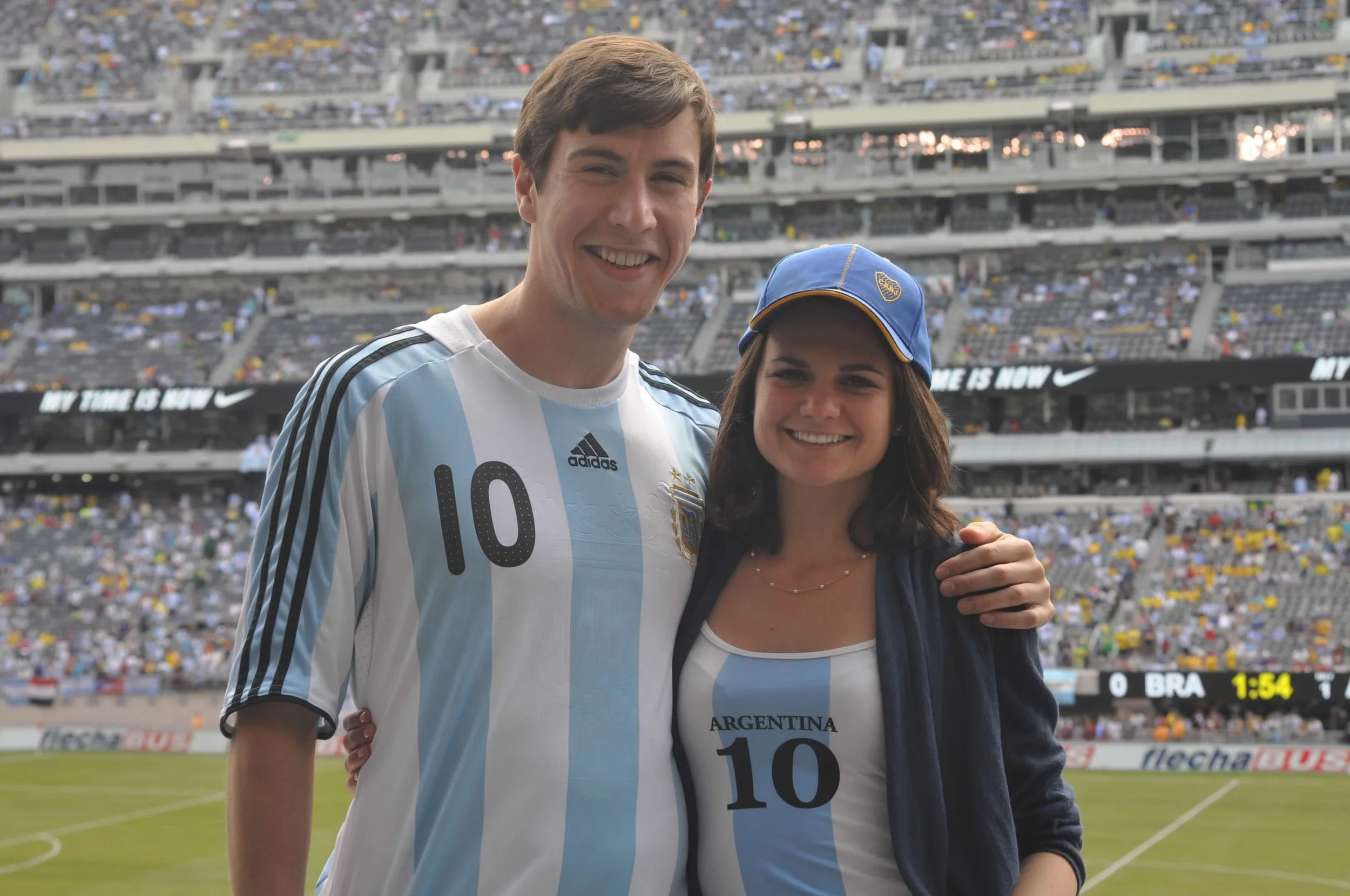
In 2012, I got to see peak Messi in person. Argentina played Brazil in a friendly at MetLife Stadium, and Messi scored a hat trick. His third was quintessential Messi: picking up the ball, running at the defense and curling it into the top corner from way outside the box.
His teammate, Pablo Zabaleta, would later say it was the happiest he'd ever seen Messi playing football. I remember that game the same way: Messi at the height of his powers, playing with joy, dominating Brazil right in front of me.
By then I was completely obsessed. Without really realizing it, soccer had taken over my life again.
Film was still my main passion, but I was struggling to gain a foothold in the film industry. One of my teammates jokingly suggested I make a documentary about our soccer team. I didn't, but the idea stuck.
I wanted to know what it was really like inside a high-level team. What does the coach say in the locker room? What are the tactics? How do they train? What does it feel like for players trying desperately to make it professionally?
This was before social media saturated us with behind-the-scenes sports content. We didn't really know what it was like to be inside a team. I wanted to show people that world so maybe they could fall in love with soccer the way I had. Soccer was still on the fringes of American sports culture, and I wanted to do my part to change that.
I knew an MLS team probably wasn't going to let some random young filmmaker into its locker room, so I discovered the Premier Development League, a league largely made up of college-aged players trying to get noticed by professional clubs. I found the Brooklyn Knights and emailed them. The general manager and coach agreed to meet with me and, somehow, they said yes.
I tried to raise money on Kickstarter. That failed. So I spent my savings on a camera, hired a friend to help me shoot, and spent three months in the summer of 2012 following their season.
A year later, the film was finished: Going Pro: American Soccer.
That documentary helped me land a job in the video department at U.S. Soccer. I moved to Chicago and spent the next four years working in soccer. That experience led me to NBC Sports, where I found myself making promos for the Premier League. Which gets me back to…
Lionel Messi changed my life.
Messi made me obsessed with soccer again. That got me playing again. Playing gave me the idea to make a soccer documentary. The documentary got me a job at U.S. Soccer. And eventually, I was making Premier League promos for NBC Sports.
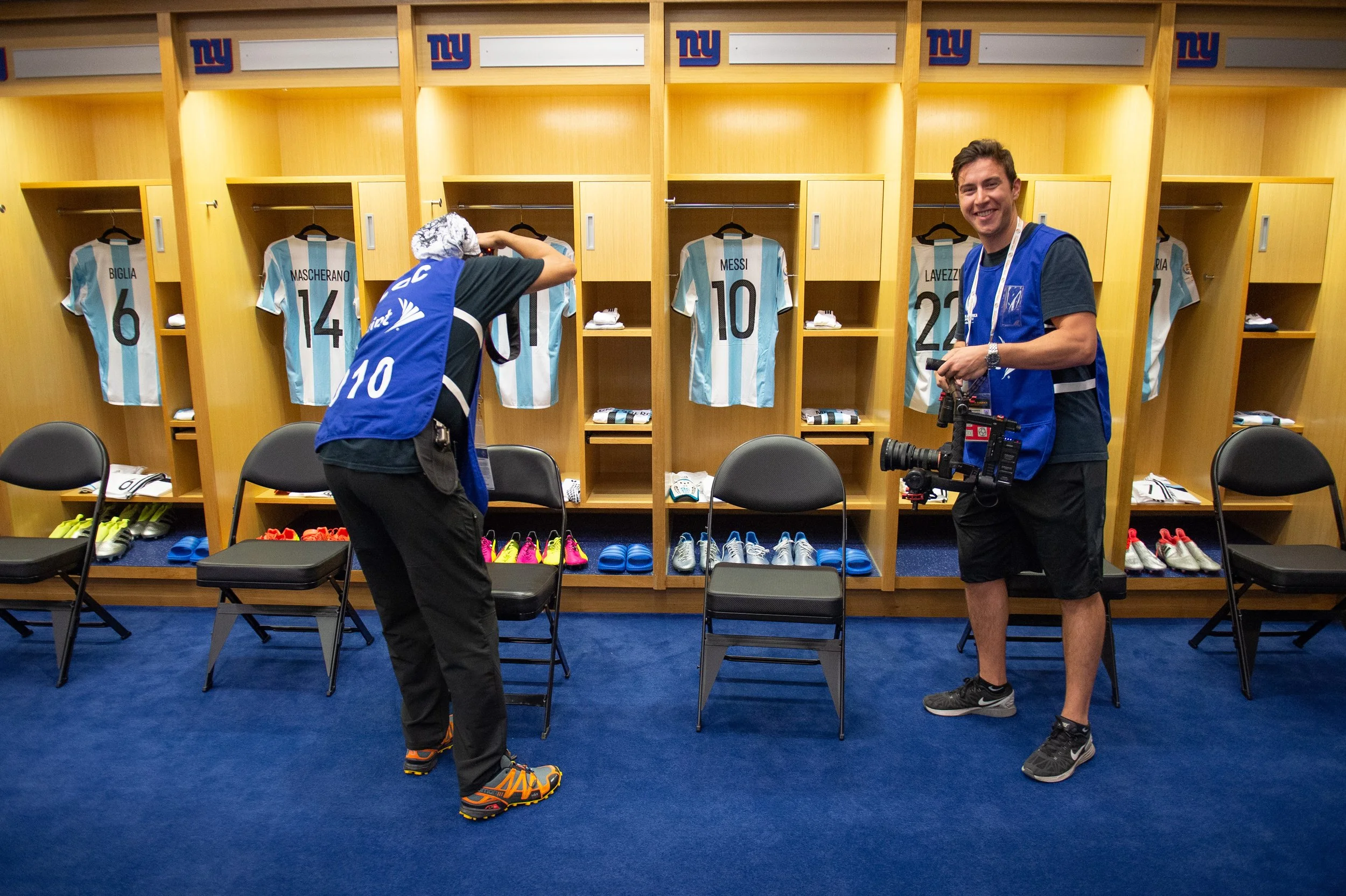
But before I got to NBC, that job at U.S. Soccer led to something I never could have imagined: it put me back at MetLife Stadium, this time on the same field as my idol.
In 2016, the United States hosted the Copa América Centenario. Argentina had lost the 2014 World Cup final to Germany and the 2015 Copa América final to Chile. Now they were playing Chile again, and because our federation was essentially running the tournament, I was there with an all-access credential filming the final.
This was it. I was going to be on the field when my idol finally won his first trophy for Argentina. This was going to be one of the best days of my life.
Well...
Argentina lost on penalties. Messi himself sent one over the bar. I stood only a few feet away as he sat on the field afterward, tears in his eyes. Four years earlier, I'd watched him score a hat trick against Brazil in that same stadium. Now I was watching him experience one of the lowest moments of his career.
Then he announced he was done with the national team.
So much for the best day of my life.
Thankfully, his retirement lasted only a few months. And I think something started to change between Messi and Argentina around then. For years it had been, Why can't he do for Argentina what he does for Barcelona? Now suddenly it was: Wait, we need this guy.
Maybe the greatest player in the world didn't have to prove that he was Argentine. Maybe we should appreciate what we had while we still had it. Slowly, Argentina began to embrace Messi.
I kept watching everything: Barcelona, Argentina, Champions League, qualifiers. My favorite Messi goal is still [this chip over Manuel Neuer in the 2015 Champions League semifinal]. Bayern had gotten the better of Barcelona before and Neuer seemed to have Messi figured out. Then came this little moment of brilliance: Messi sent Jérôme Boateng stumbling to the ground and delicately chipped Neuer. Barcelona went on to win the Champions League.
And fittingly, that final was back at MetLife Stadium.
The same place where I'd watched him score a hat trick against Brazil at the peak of his powers in 2012. The same place where I'd watched him sit devastated on the field and retire from Argentina in 2016.
Now he was back there, at 39, playing in another World Cup final.
Spain was too good. There would be no repeat of that feeling from 2022.
In a strange way, that only made 2022 feel even more special. You realize just how hard it is to win a World Cup. You get a chance once every four years, and then almost everything has to go right. Messi played in three World Cup finals and won one. I'm just incredibly grateful I got to experience the one.
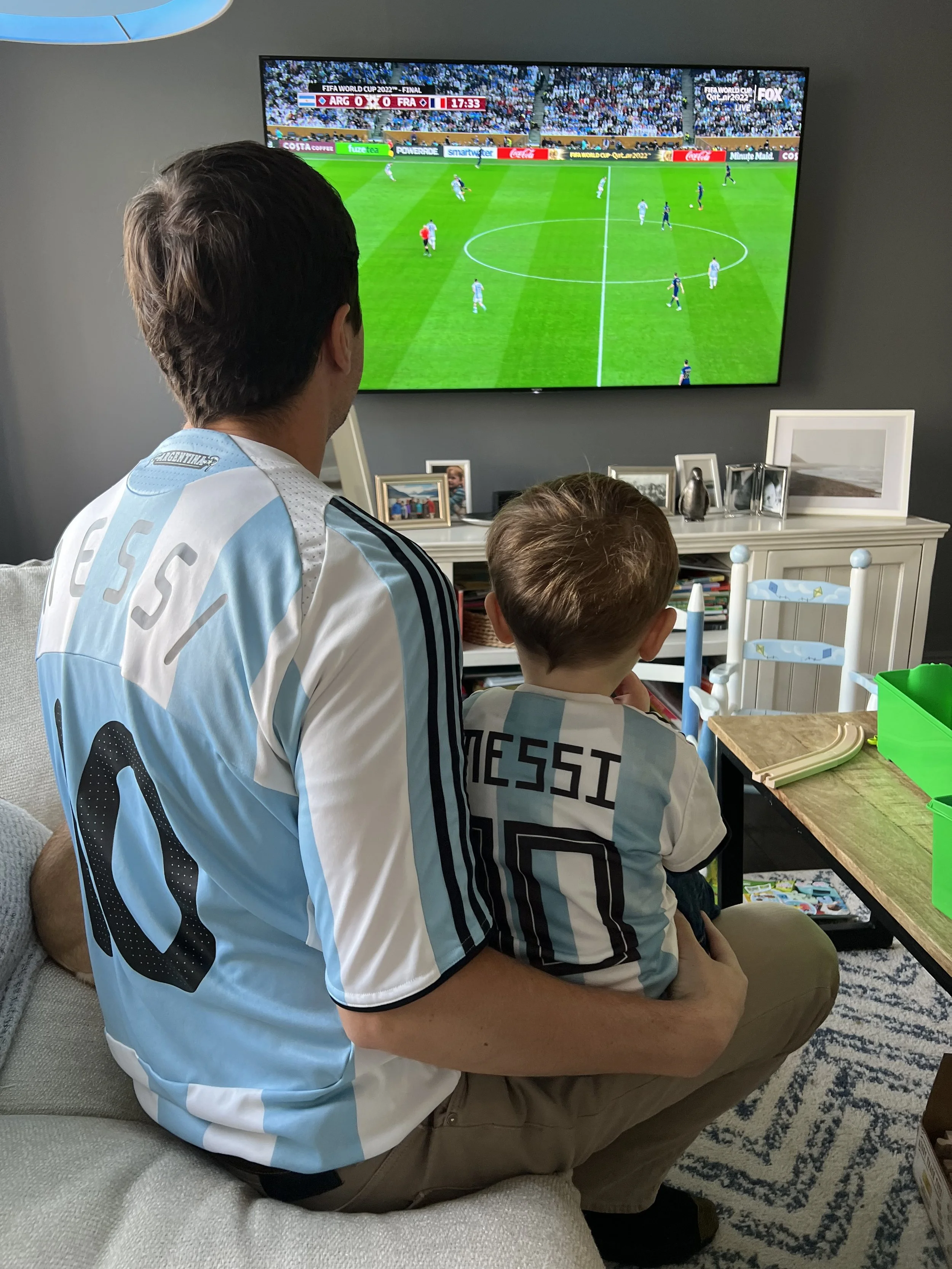
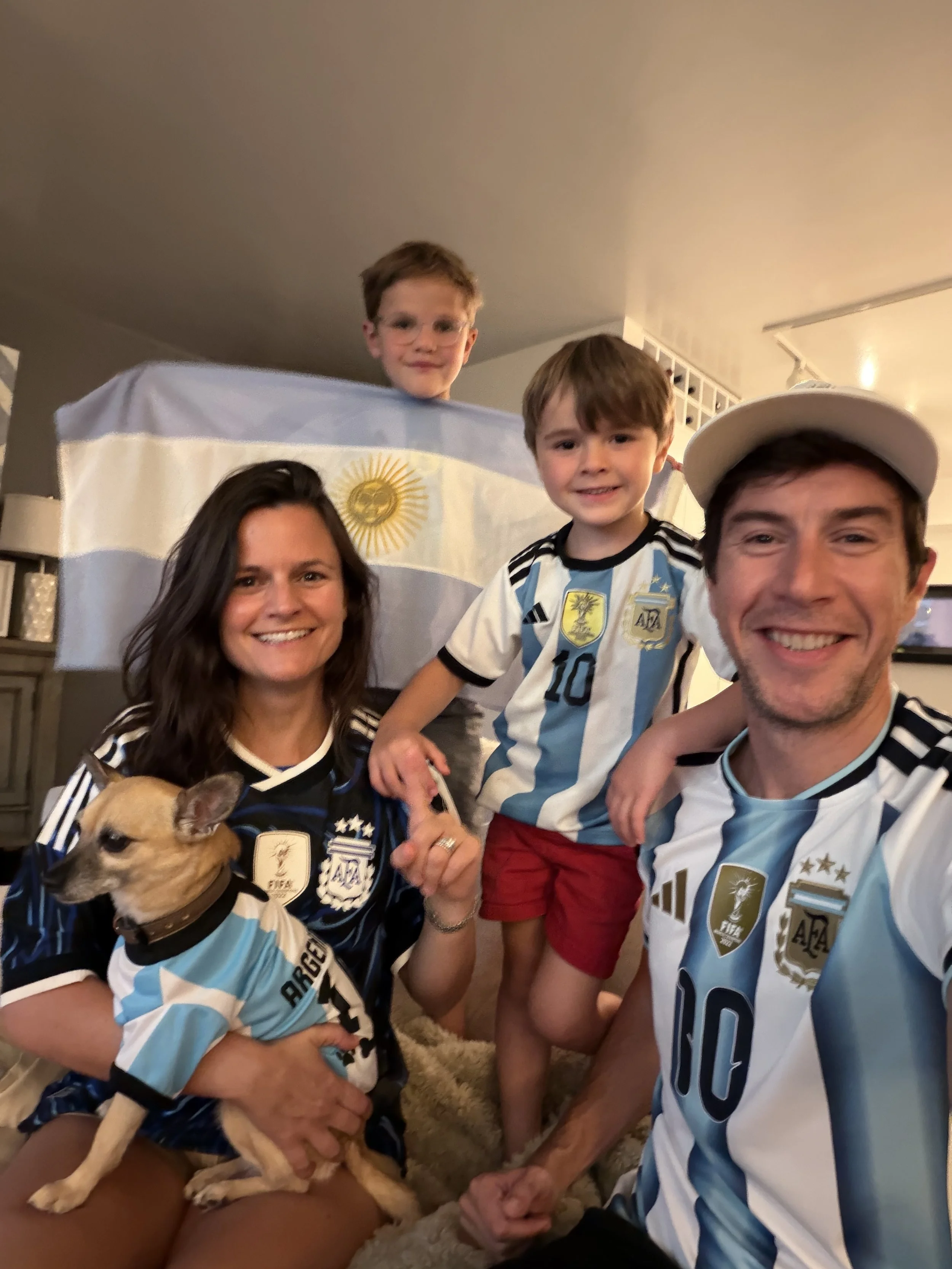
Last night I watched Messi's "Last Tango" with Argentina, and all these memories from the last 20 years came flooding back. The teenage prodigy who was supposed to be the next Maradona. The player who made me fall in love with soccer again. The trips to bars just to find a Barcelona game. The soccer team I joined. The documentary I made. Moving to Chicago. Working at U.S. Soccer. The highs and lows at MetLife. The Copa América. The jersey. The World Cup. My grandmother's blanket. And now my own kids are obsessed with Messi because their dad is obsessed with Messi.
There are obviously a million little decisions and accidents that determine where a life ends up. But I can trace an awful lot of mine back to watching this little Argentine guy with the ball at his feet and thinking, I have to see more of this.
His talent brought me back to the sport, but his demeanor made it easy to keep rooting for him. No theatrics. No faking injuries. Respect for the game. And year after year, whether Argentina loved him or criticized him, he kept coming back.
So yeah, Messi retiring from Argentina is a big deal to me. I owe him a thank you. For the games, the memories, the friendships, Going Pro, a career that somehow became intertwined with soccer, and for giving my kids and me something we now get to share.
Thank you, Leo.
Although... I still have a feeling we'll see that number 10 in an Argentina jersey again.
My prediction: Copa América 2028.